


From Food Guide Pyramid to MyPlate Nutrition: How Things Have Changed
- Ella B

- May 4, 2023
- 4 min read
Updated: Jan 19, 2024
For those who may remember the late 1990s, the United States Department of Agriculture (USDA) introduced the Food Guide Pyramid as a visual representation of recommended dietary guidelines. As its title suggests, it was shaped like a pyramid and divided into sections to represent how much of each type of food was recommended for a healthy diet.
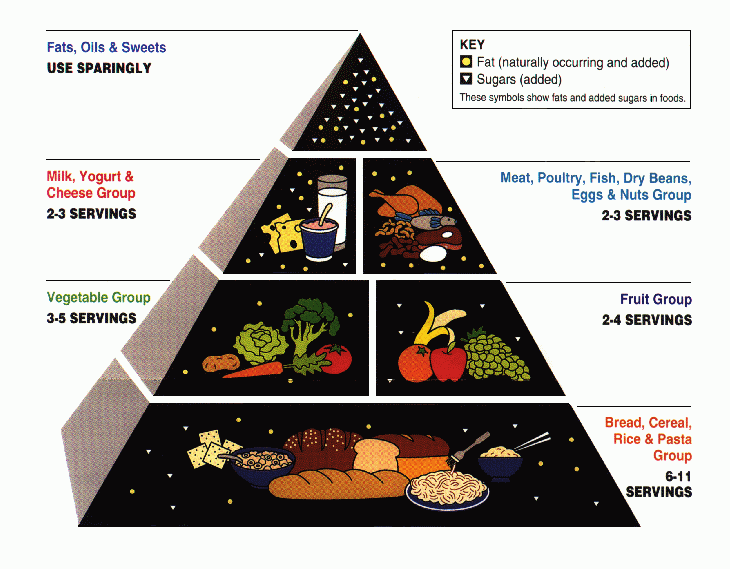
At the base of the pyramid were the grain and vegetable groups, which were the largest sections of the pyramid. Above those were the fruit, milk, and meat groups, with each section becoming progressively smaller as it went up the pyramid.
The pyramid also included a band running up the side, which represented fats, oils, and sweets. These foods were placed at the top of the pyramid, indicating that they should be consumed in small amounts as part of a healthy diet.
The Food Pyramid was criticized for being difficult to understand and for not providing specific guidance on portion or serving sizes. In 2011, the USDA replaced the Food Guide Pyramid with MyPlate Nutrition, which was developed to address the issues of complexity and lack of guidance on portion sizes and offer a simpler and more intuitive way to understand how to build a healthy meal.
When I first heard of MyPlate Nutrition in 2014 during a New Parents class after having my son, I asked myself what it was. Being older and having grown up with the Pyramid, I never had an issue understanding it, so the change was very confusing. Let's dive into the changes and differences.

MyPlate Nutrition is a visual tool that shows the recommended portions of food groups that should be consumed at each meal. It is divided into four sections: fruits, vegetables, grains, and protein. A fifth section represents dairy, but sometimes a water glass is used as its representation. Each section represents the recommended proportion of that food group in a healthy meal.
The main difference between MyPlate and the Food Guide Pyramid is the way the information is presented. As you can see above, MyPlate is designed to be more user-friendly and easier to understand. It uses a visual representation of a plate with different sections for each food group, making it easy to see how much of each group should be included in a meal. The Food Guide Pyramid, on the other hand, used a vertical pyramid shape, with larger sections for food groups that should be consumed more often and smaller sections for food groups that should be consumed less often, as shown closer to the top.
Another key difference is the inclusion of physical activity in the MyPlate Nutrition guide. MyPlate encourages people to engage in regular physical activity, emphasizing its importance in maintaining good health. By including physical activity as a component of a healthy lifestyle, MyPlate provides a comprehensive approach to health and wellness. In my opinion, this addition to the newer guide is necessary because we live in a world where everyone is so consumed with technology that they forget the key to staying healthy is not just eating healthy but exercising too.
Even schools don't offer as much physical education as I had growing up. My kids tell me about having P.E. once a week, whereas I remember having it every day! In elementary school, we did everything from the parachute run around to those horrific, nightmare-inducing scooter seats. All of you who were in elementary school in the 90s know which ones I'm talking about. If you didn't move your feet fast enough, it would catch on your ankles while scooting across the gym floor. By the time I hit middle school, I was learning archery in class or playing dodgeball.
It's worth noting that not much is discussed about the release of MyPlate. In fact, it wasn't until 2014 when South Park aired a spoof in Season 18 called "Gluten Free Ebola" that the confusion surrounding the shift from the Food Pyramid to the new MyPlate dietary guidelines was highlighted. The episode even jokes about flipping the Pyramid upside down to solve the problem. This is also around the time when gluten-free diets gained popularity, even among those who didn't require them.
Moving on to the benefits of MyPlate, it offers several advantages over the Food Guide Pyramid. The plate visual makes it easy to comprehend how to construct a healthy meal, while also promoting the consumption of a variety of foods from each food group for a well-rounded diet.
MyPlate Nutrition is a valuable tool for building a healthy and balanced diet. Its straightforward and intuitive design makes it easy to follow, and its focus on physical activity reinforces the importance of a comprehensive approach to health and wellness. While the Food Guide Pyramid served as a useful guide for many years, MyPlate represents a significant improvement in how we approach nutrition and health.
For additional resources, tools, and tips on how to build a healthy plate and lead a healthy lifestyle, please visit MyPlate.gov or the Cornell Cooperative Extension from Cornell University.


Comments